
Why quality control is key in medical writing and scientific visual storytelling

Working in medical affairs in pharma, you probably have a baseline expectation that your agency partner will thoroughly proofread and run quality control (QC) on the materials they create for you. After all, you want clean copy, stylistic consistency, and easy readability in your slide decks, videos, infographics, and eLearning modules. Read more

7 reasons why PowerPoint is the ideal basis for developing engaging eLearning modules

As a medical affairs employee at a pharmaceutical or biotech company, you understand the importance of continuous learning and professional development. Staying up-to-date on the latest research, treatments, and technologies is crucial for success. This is where eLearning comes into play, allowing you and your colleagues to review required materials at your own pace. Read more

Navigating the price range: Unraveling the factors behind visual storytelling solution costs

As a visual storytelling agency, we often face the question of cost when we receive a project briefing and create a proposal. It’s an understandable question. But the answer can vary greatly. In many cases, we first need to provide a price range, which naturally leads clients to wonder, “what do I get for the lower end, and what do I get for the higher end?” Read more

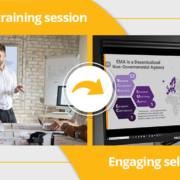
Transforming a live training session into a self-study tool for medical affairs

Training sessions are an essential aspect of any medical affairs team in a pharmaceutical or biotech company. They provide an opportunity for medical affairs professionals to learn about the latest developments, industry best practices, and new product launches. But face-to-face or online training sessions have some limitations. The most obvious: only those who participate on the day of the training session get to access the content. This means that all those who could not participate in the session, as well as new medical affairs professionals who join later, miss out on the valuable information. Read more

Can we get open files?

When you work with an agency on slide decks, illustrations, infographics, print materials, or videos, you probably want to use these assets for at least a few years and have them adapted for different markets or leverage them for other materials. That requires having what many people call “open files” or “source files.”

Read more

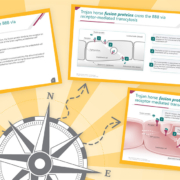
Pub-explainer slide decks: Transform a scientific publication into an engaging slide deck

Scientific publications are valuable sources of the latest research findings and study data. Working in pharma, your team relies on this information to keep up to date with the latest developments in their field. Slide decks are often used to disseminate the newest information to internal and external audiences. But it can be challenging to create slides that are both easy to understand and engaging. In this newsletter, we offer some tips to bring publication explainer decks to life. Read more

What makes a powerful infographic

In the article “The Power of Infographics”, we showed that infographics are excellent and versatile tools for medical affairs teams because they get to the point, spark conversation, and help you reach more people in your target audience.

In this article, we give the 7 key ingredients for infographics with the power to educate HCPs and your medical affairs team while giving them a lasting impression of the story behind your data. Read more

How to create a convincing investor-pitch slide deck

In a pitch to potential investors, biotech companies have to get to the point when explaining their ideas and concepts. The slides accompanying the pitch need to clearly and concisely underline the key information and support the oral presenter. A well-designed slide deck with carefully selected, easily understandable content wins half the battle for the success of an excellent business idea.

But how to create a sophisticated and visually interesting slide deck that captivates your audience? Read more

Do-it-yourself or delegate? The question of creating a scientific slide deck

If you work in pharma, you know slide decks are the mainstay of scientific communication. They allow companies to relay complex medical ideas in ways that are digestible and easy to understand. Making a basic slide deck is relatively easy. PowerPoint is user-friendly, and pharma companies have robust scientific knowledge in-house. So why would anyone outsource their scientific slide decks to a visual storytelling agency? Here are some points to consider when you need to decide if it’s better to develop a slide deck yourself or it’s better to work with an external agency. Read more

10 steps for powerful infographics

Creating an informative yet engaging medical infographic is not easy. If it were, pharma companies wouldn’t invest in our knowledge and experience in developing them. But even though making great infographics isn’t easy, that doesn’t mean it needs to be complicated.

Here are 10 steps we use at CAST PHARMA to develop infographics that meet client needs and engage target audiences. Read more