

Speeding up training in medical affairs: “Fail fast, learn fast” vs. “slow is smooth, smooth is fast”
Effective training for medical affairs teams is critical for ensuring they are equipped with the right knowledge and skills to adapt to emerging medical developments while communicating with transparency and accuracy. There are times in the learning journey when speed is key and times when careful planning is essential.
If you think of medical affairs training as a journey through a mountain range, finding the right cadence is like choosing whether to bike or walk.
Mountain biking can be faster and more flexible. The rider easily races around curves and over hills, choosing paths quickly without constantly stopping to check a map. If the path becomes impassable, the biker can quickly pivot and course correct. This is the philosophy of “fail fast, learn fast.” Move quickly, take risks, and adapt through trial and error. It means learning through experience rather than waiting for a perfect plan.
The other option is hiking: slower, more methodical, and deliberate. The hiker pauses at each fork in the trail, checks the map, and ensures that the next step is aligned with the end goal. By taking time to plan, the hiker avoids unnecessary detours and ensures they stay on track and use resources efficiently. This is the mindset of “slow is smooth, smooth is fast”, which entails careful planning to minimize the chance of costly mistakes later.
Both approaches are needed for training in medical affairs. Some situations require rapid learning and iteration, while others benefit from a more deliberate and thorough approach.
Learning faster by failing faster

At times, the speed and agility of a mountain biker are necessary, especially when the goal is to quickly adapt to new information or evolving processes.
For example, when onboarding new medical affairs team members, it’s essential to provide them with a foundational understanding as quickly as possible. Instead of waiting for a fully refined training program, they could start with an initial slide deck that pulls together the various resources you already have available. That will get them started on the basics while you develop more comprehensive learning modules deliberately structured as part of a curriculum. Questions and feedback from your trainees on your provisional learning decks can then help inform a more robust and intentional learning program.
Likewise, when developing a training deck, you may not have time to wait for every key stakeholder to provide input. If you’re not hearing back from your broader team when they’re asked to review or give feedback on a material, it may make sense to make a cutoff date for their input. If they notice later that further adjustments are needed, these updates can be rolled out in a future iteration or even a micro-learning with the latest developments.
Making a hike faster by walking slowly and smoothly
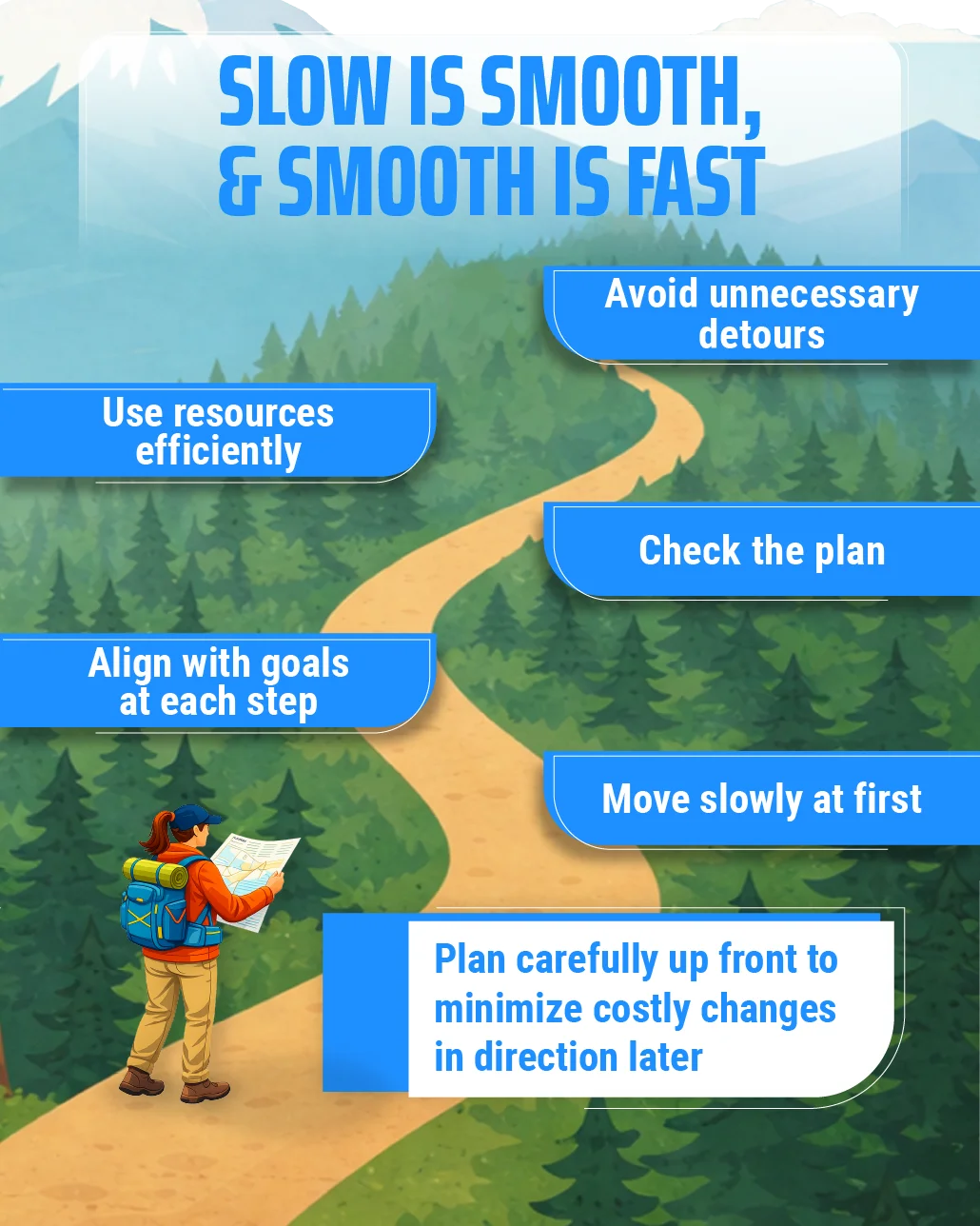
Some areas of training demand careful planning and methodical execution to ensure that the team is fully prepared and compliant. Here, the hiker’s “slow is smooth, smooth is fast” approach ensures that foundational knowledge is properly established before moving forward, reducing the risk of errors that could derail future work.
This is especially important when working on materials that will serve as the basis for your team’s understanding of their role in the field and their key communication goals. If you run downhill towards what looks like a shortcut without checking your map, you may need to backtrack later in the day, when you have less time and energy.
And in some cases, the time saved by rushing can be easily negated by time spent course correcting. It can be tempting to rush to get materials done without ensuring alignment with your scientific platform, which is still being revised, or just letting key stakeholders make ad hoc adjustments to wording that was in your approved lexicon instead of spending time in discussions to ensure their alignment. But as you get closer to launch, choices like this can mean spending more time later correcting misconceptions among your field medicals than the few extra days or weeks you would have needed to get your materials consistent from the start.
Choosing the Right Approach
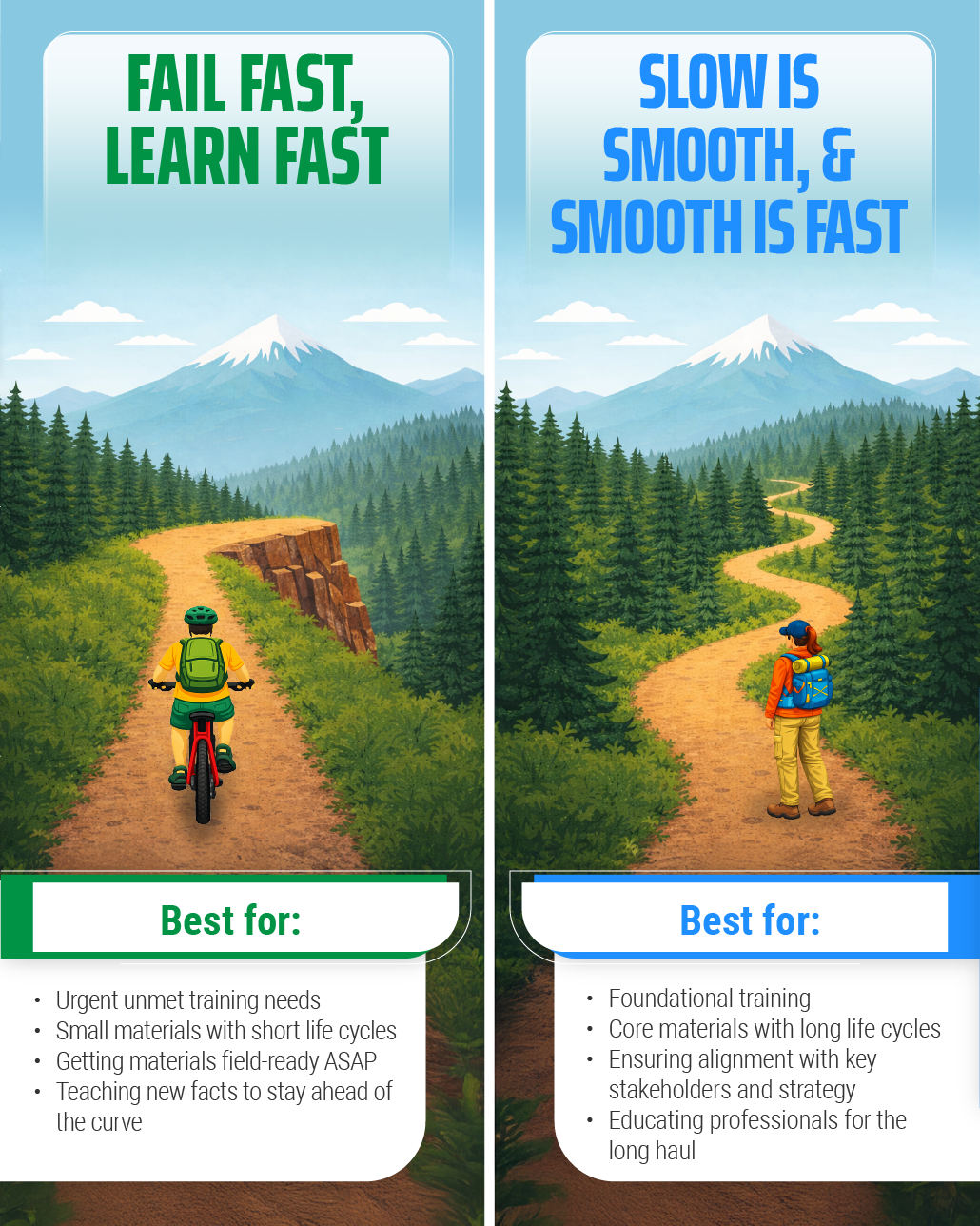
The key to effective training materials lies in knowing when to hike and when to bike:
- Is the goal of this material teaching new facts to stay ahead of the curve? Some aspects of training, such as quickly learning new data or adapting to fast-changing therapeutic areas, call for a “fail fast, learn fast”
- Or is the goal of this material educating professionals for the long haul to tackle the challenges they will encounter in the field? Areas involving deeper knowledge of the disease state, therapeutic area, and your therapy’s place in it benefit from a more structured, “slow is smooth, smooth is fast”
By recognizing which approach best fits the task at hand, you can ensure that your medical affairs team is properly equipped to navigate both the fast-paced and the more methodical aspects of their work. Whether you’re mountain biking or hiking, selecting the right strategy for each phase of training will ultimately lead to better outcomes and a more efficient, adaptable team.